In the Disaster Year of 1672, the Netherlands were attacked from all sides, by Louis XIV, the king of France (the so called Sun King) and others. The invasion was stopped by flooding the area between Muiden at the Zuiderzee to Woudrichem in North Brabant. The Old Dutch Waterline was born and would later be expanded into the most successful line in the Netherlands with improved fortified towns, various fortresses and castles.
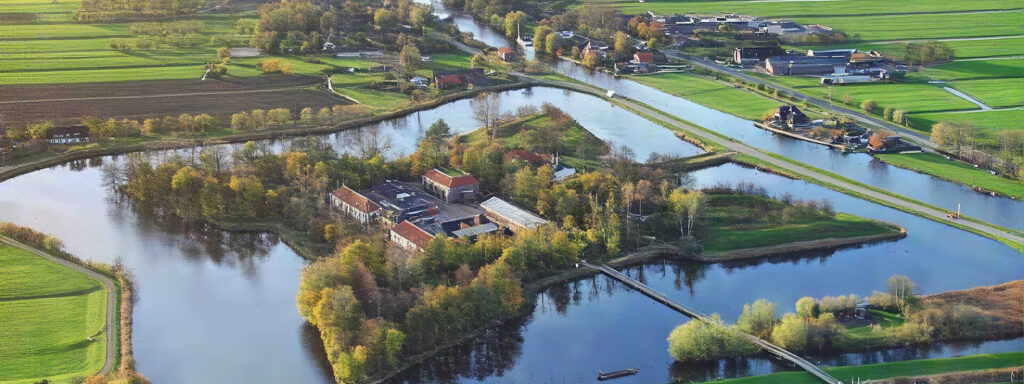
Now the Old Dutch Waterline forms a beautiful and unique cultural water-heritage with fortified cities, windmills and pumping stations, bridges, locks, and flood defences. It is worth the effort to visit, experience, and manage.
That is why the OHW Foundation brings together governments, entrepreneurs, and (volunteer) organisations who have an interest in the Old Dutch Waterline.

On November 1st of 2017 the Old Dutch Waterline foundation was established. The foundation wants to contribute to the preservation of our national heritage, the Old Dutch Waterline. It wants to gain broad recognition for the historical and water management significance of the Old Dutch Waterline and the relevant role which the Old Dutch Waterline can play in the present.
The OHW foundation is formed by thirteen fortified towns and waterline municipalities, namely Gouda, Nieuwkoop, De Ronde Venen, Bodegraven-Reeuwijk, Woerden, Montfoort, Krimpenerwaard, Molenwaard, Zederik, Leerdam, Vianen, Gorinchem and Woudrichem. Furthermore, two water boards are members: De Stichtse Rijnlanden and Amstel, Gooi en Vecht.
The OHW Foundation is managed by a board with seven members. There is also a Waterline Council in which the fortified towns and water boards participate; this Waterline Council can provide both solicited and unsolicited advice.
The OHW Foundation has the goal to contribute to:
The OHW Foundation wants to achieve these goals together with its partners and is working on:
Home > OHW Foundation